The Fourth Purushartha
There are four aims or purposes to human life. At a very basic level, they can be described as:
To tread the right path, Dharma; to make a living, Artha; the desire to attain these, Kama; and the ultimate goal of life, Moksha.
In the early 1900s, an American psychologist called Abraham Maslow presented a hierarchy of needs, with physiological needs being the most basic, followed by safety, sense of belonging and love, esteem and finally self actualisation.
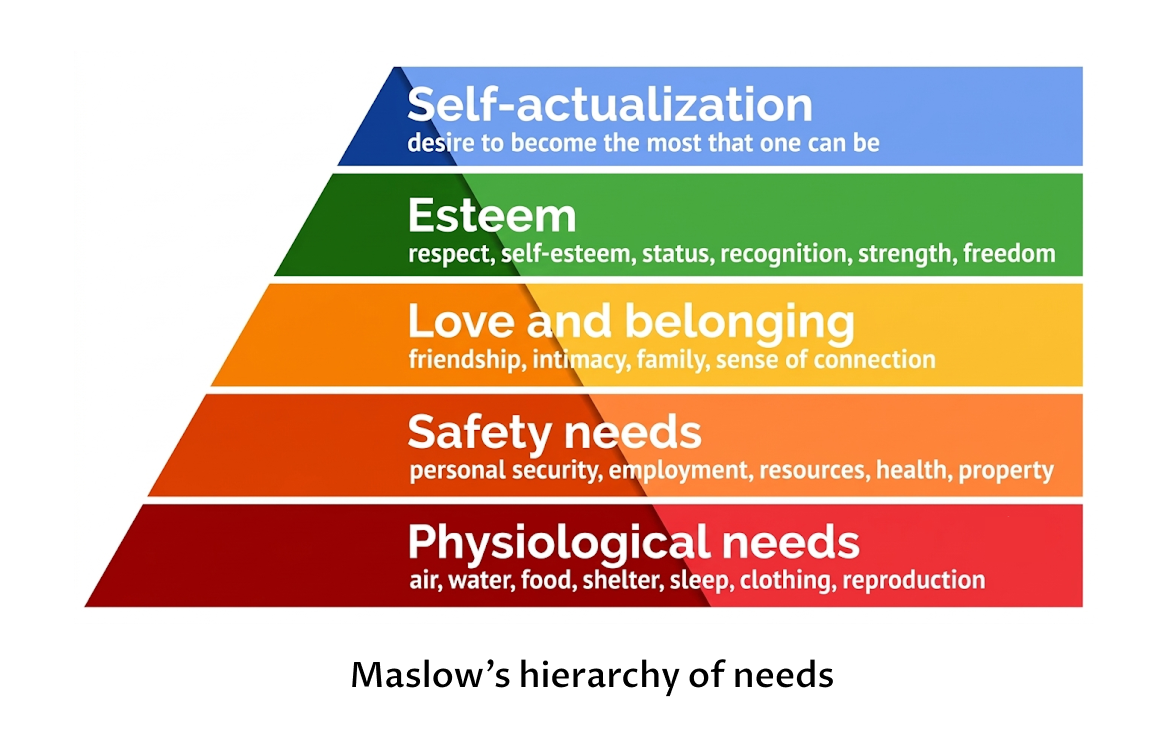
Maslow’s concept of self-actualisation is not the same as the concept of Moksha, yet self- actualisation is placed at the top of the pyramid in Maslow’s hierarchy, while the quest for Moksha is the fourth or last one in the case of Purusharthas.
Very few seek the fourth Purushartha/ self actualisation, while being busy grappling with issues of living... studying, earning, running a household, managing children, handling parents, socialising, acquiring, spending, travelling... all the while hoping to leave behind something of substance. This is but natural.
Vairagya
The scriptures do not recommend that everyone seeks moksha. It is well understood that each jeeva is at a different level of spiritual evolution. Therefore the jeeva is encouraged to first experience everything the world has to offer. Only after satisfying oneself by achieving the lower order desires does the jeeva realise that like the lotus, it has to remain in the muddy waters of the samsara yet remain unsullied. Such a jeeva attains a certain degree of vairagya.
When we pray to God, we are to only ask for gnyaana, bhakthi and vairagya. Vairagya is not indifference or merely detachment. It is not shunning one’s duties or escaping from reality. It is the performance of all actions with the knowledge that ‘I am not the doer’ and without getting unduly interested in the outcome of such actions.
To conclude, it is apt to recollect the very famous phrase that the Late Bannanje Govindaachaarya would use to describe vairagya... he called it “detached attachment.”
Seeking happiness
What does man strive for? Happiness seems to be the elusive goal one chases constantly. And in the pursuit of happiness, we are conditioned to postpone our happiness for a better tomorrow. Study well to get a job, work well to get a promotion, work harder to be able to afford certain things... and so on. Whether that certain happiness one strives for all his life will be attained, and whether it will indeed yield the happiness one hoped for, is anybody’s guess.
But the world we live in is filled with opposites. Day follows night and night follows day. Happiness is followed by sorrow and sorrow may be replaced by happiness. What man seeks is unadulterated happiness, bliss with no trace of sorrow. This is the state of Moksha.
If one cannot experience unadulterated happiness in this realm of existence how do we even know the wonder called bliss with no trace of sorrow? Every person has experienced this and continues to do so, in the state of deep, dreamless sleep. This state is the closest an ordinary human being can experience bliss.
To be continued...